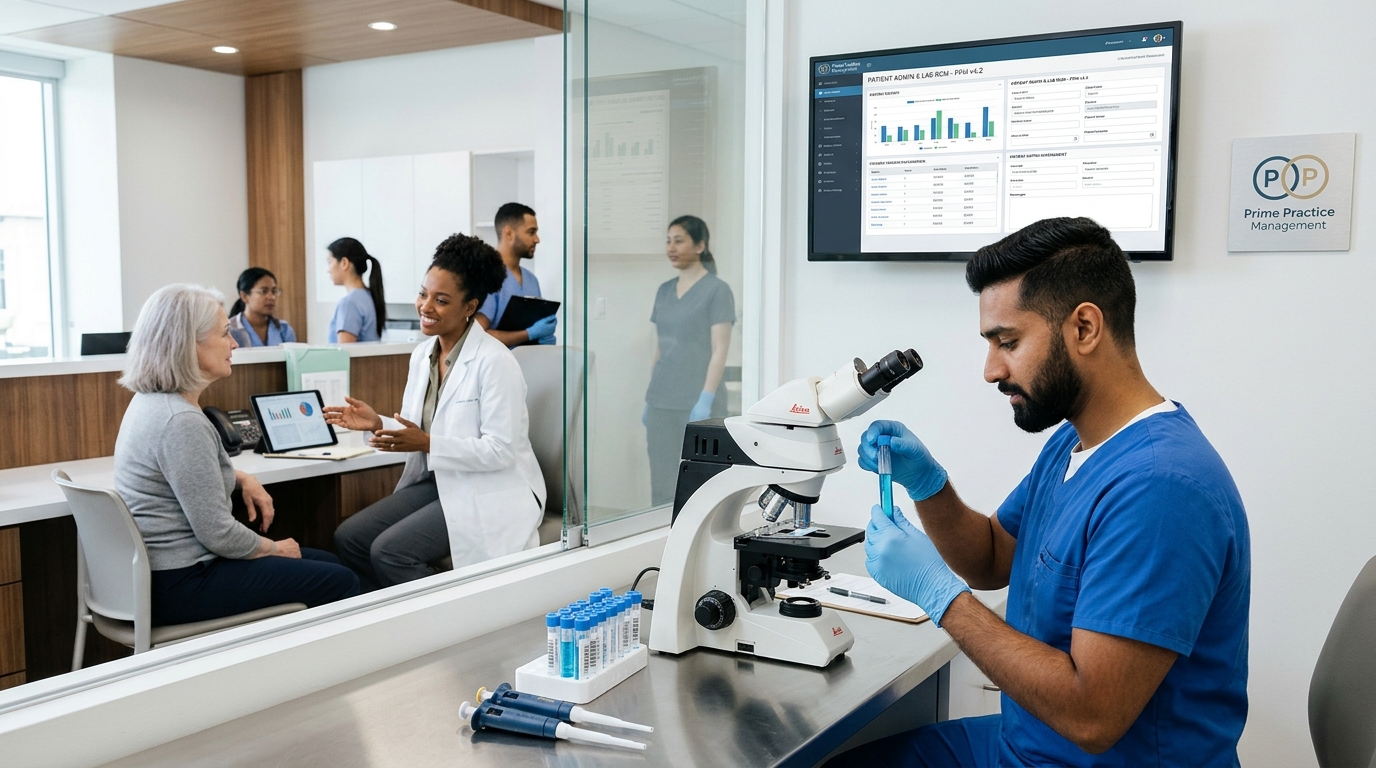

Opening a new medical clinic with integrated in-house laboratory services is one of the most effective ways to elevate patient care and maximize revenue potential. Having diagnostic testing on-site provides real-time results, improves patient satisfaction, and keeps valuable diagnostic billing under your own roof.
However, launching a combined facility presents unique operational, regulatory, and revenue cycle management (RCM) challenges.
To build a financially viable clinic and lab from day one, healthcare leaders must execute a synchronized strategy covering facility setup, lab certification, payer credentialing, and billing administration.
1. Regulatory Setup: Differentiating Clinic and Laboratory Compliance
A major pitfall when establishing a new clinic with an in-house lab is failing to treat the laboratory as a distinct regulatory entity.
+------------------------------------+     +------------------------------------+
|        CLINIC REQUIREMENTS         |     |          LAB REQUIREMENTS          |
|  • State Medical Board Licensing   |     |  • CLIA Certification              |
|  • Facility NPI (Type 2)           |     |  • State Lab Licensing             |
|  • Group Provider Credentialing    |     |  • COLA / CAP Accreditation        |
|  • OSHA & HIPAA Protocols          |     |  • CPT / HCPCS Diagnostic Coding   |
+------------------------------------+     +------------------------------------+
Key Regulatory Steps:
- CLIA Certification: Before performing any diagnostic testing—even waived tests like rapid flu or dipstick urinalysis—your facility must obtain a Clinical Laboratory Improvement Amendments (CLIA) certificate.
- State Laboratory Licensing: Several states require separate facility licenses for diagnostic testing labs beyond standard medical practice licenses.
- OSHA & HIPAA Compliance: In-house labs carry heightened biohazard compliance demands, requiring written safety protocols, waste management contracts, and strict patient data encryption.
2. Payer Credentialing & Enrollment: Avoiding the 180-Day Cash Flow Delay
You cannot bill commercial or government health plans for new providers or laboratory services until enrollment contracts are finalized.
Traditional payer credentialing takes 90 to 180 days. A failure to initiate provider and facility enrollment early can force your clinic to operate for months without receiving insurance reimbursements.
                          PRE-LAUNCH CREDENTIALING TIMELINE

Month 1-2                 Month 3-4                 Month 5-6                 Go-Live
  │                         │                         │                         │
  ├─ NPI / CAQH Setup ──────┼─ App Submissions ───────┼─ Payer Verification ────┤
  └─ CLIA Application ──────┴─ Facility Contracting ──┴─ Fee Schedule Audits ───┘
Essential Credentialing Checklist:
- Establish Dual NPI Numbers: Obtain a Type 2 Organization NPI for the clinic entity and register your CLIA number for laboratory billing.
- Complete CAQH Profiles: Build and verify CAQH records for all practicing physicians and mid-level providers 4–6 months prior to opening.
- Link Lab Privileges to Payer Contracts: Ensure your commercial insurance contracts specifically permit on-site laboratory testing, avoiding claim rejections for unapproved diagnostic services.
3. Revenue Cycle Integration: Synchronizing Clinic & Lab Billing
Billing for clinical evaluation and management (E/M) services alongside laboratory procedures requires structured charge capture and coding workflows.
[ Patient Visit ] ──► [ EHR Documentation ] ──► [ Order Lab Test ] ──► [ LIS Execution ]
                                                                             │
[ Reimbursement ] ◄── [ Clean Claim Scrubbing ] ◄── [ Auto-Charge Capture ] ◄┘
Billing & Coding Best Practices:
- Modifier Management: Correctly applying billing modifiers (such as Modifier 25 for significant, separately identifiable evaluation and management services on the same day as minor procedures) prevents claim denials.
- EHR and LIS Integration: Connect your Electronic Health Record (EHR) directly with your Laboratory Information System (LIS) to automatically bridge diagnostic codes (ICD-10) with laboratory procedure codes (CPT/HCPCS).
- Pre-Verification of Coverage: Verify patient eligibility and lab coverage requirements prior to performing non-routine diagnostic panels.
4. Launching for Sustainable Growth
Opening a new clinic with an in-house laboratory offers a direct path to higher operational efficiency and improved patient care. By aligning regulatory filings, payer enrollment, and revenue cycle management early in the development process, practice owners can protect cash flow and focus on patient outcomes.
At Prime Practice Management, we streamline the full practice startup cycle—from facility credentialing and enrollment to end-to-end medical billing and RCM.
Ready to Launch Your Clinic & Lab?
Don't let credentialing backlogs or complex laboratory billing delay your opening day.
Contact Prime Practice Management today to schedule a consultation with our medical billing and practice setup specialists.